
The Hidden Cost of Manual Tasks in Tour Operations (And How to Recover That Time)
Introduction: The work nobody talks about
Behind every seamless travel experience lies a decidedly unglamorous reality: spreadsheets, email threads, duplicated data, and an almost heroic amount of administrative juggling. While guests remember sunsets and city tours, operators remember chasing confirmations, updating availability, and reconciling payments late into the evening.
Manual work in tour operations is a bit like stage crew in theatre. Essential, invisible, and often underappreciated. But unlike theatre, where the show ends, tour operations repeat this performance daily (endless matinee’s), often at increasing scale.
The issue is not just that these tasks exist. It is that they quietly consume the very resource operators need most to grow: time. And unlike costs that show up neatly in a profit and loss statement, this one hides in plain sight.
What counts as a “Manual Task” in tour operations?
Manual tasks in this context are not just pen and paper activities. They include any processes that require human intervention where automation could reasonably take over (no, not the Terminator 2 kind).
This includes the usual suspects:
- Managing bookings across multiple systems or platforms
- Sending confirmation emails and itinerary updates manually
- Coordinating with suppliers via email or phone
- Updating availability and pricing by hand
- Generating invoices and reconciling payments
- Compiling reports from disparate data sources
Individually, each task feels manageable. Collectively, they resemble a slow leak in a ship’s hull. Hard to notice at first, but eventually threatening the entire voyage.
The true cost of manual work (beyond just hours)

It is tempting to think of manual work purely in terms of time spent. But that is only the most visible layer.
Time drain
Small tasks accumulate. Five minutes here, ten minutes there. It adds up to hours each week that could be spent on growth, partnerships, or improving the customer experience.
Human error
Manual processes invite mistakes. Incorrect dates, missed bookings, pricing inconsistencies. These errors do not just cost time to fix. They can damage customer trust.
Lost bookings
Slow response times can mean missed opportunities. In an era where travellers expect near instant confirmation, delays can push them toward competitors.
Operational fatigue
Teams bogged down in repetitive tasks are less engaged and more prone to burnout. Creativity and strategic thinking tend not to flourish in inbox overload.
Scalability limits
Perhaps most critically, manual operations do not scale well. Growth often means hiring more staff rather than improving systems. A costly and inefficient model.
In short, manual work does not just cost time. It constrains the entire business.
Where tour operators lose the most time (real bottlenecks)

Not all manual work is created equal. Certain areas consistently emerge as the biggest drains.
Data re-entry across systems
Entering the same booking details into multiple platforms is both time consuming and error prone. It is the operational equivalent of copying homework. Tedious and unnecessary.
Handling changes and exceptions
Last minute changes are inevitable in travel. Without streamlined systems, managing these becomes a logistical headache involving multiple emails and updates.
Supplier coordination
Chasing confirmations from suppliers can feel like herding cats. Persistent follow-ups, unclear status, and fragmented communication.
These bottlenecks are not just inefficiencies. They are friction points that ripple across the entire operation.
Why most operators don’t fix this (yet)
If the problem is so evident, why does it persist?
1. It works well enough
Many operators rely on systems that, while inefficient, are familiar. Change introduces uncertainty, and inertia often wins.
2. Fear of disruption
Switching systems can feel risky, particularly during busy periods. The prospect of downtime or data migration issues can deter action.
3. Lack of visibility
Because the cost is distributed across many small tasks, it is rarely measured. What is not quantified is rarely prioritised.
4. Fragmented tech stacks
Operators often use a patchwork of tools. Booking systems, email platforms, spreadsheets. These do not communicate effectively with one another, and regularly lead to too many acts of human error than we would like to admit.
In essence, the problem is not just operational. It is psychological and structural.
How to recover lost time without rebuilding your business
The good news is that solving this does not require a complete overhaul. Incremental, strategic changes can yield significant results. You can start by monitoring the following:
Identify high frequency tasks: Start by pinpointing the processes that occur most often. These offer the highest return on automation.
Standardise workflows: Consistency is a prerequisite for automation. Define clear processes before attempting to streamline them, or you are inventing the car bonnet before establishing the wheel.
Centralise data: A single source of truth reduces duplication and errors. It also simplifies reporting and decision making and has become the very baseline across most industries, even outside of travel and tourism, in the modern world.
Automate repetitive actions: Tasks like confirmations, notifications, and updates are prime candidates for automation.
Integrate systems: Where possible, connect tools so that data flows seamlessly rather than being manually transferred.
Think of it less as rebuilding and more as removing unnecessary friction. Like oiling the gears of a machine that is already in motion (that’s the last car analogy, I promise, as the driver of a frequently breaking down Peugeot).
What automation actually looks like in practice
Automation is often spoken about in abstract terms, but in practice it is remarkably concrete. It shows up not as some grand technological overhaul, but as a series of small, precise improvements that quietly remove friction from daily operations.
For instance, booking confirmations no longer need to be manually assembled and sent. Customers receive immediate and accurate confirmations as soon as a reservation is made, reducing both response time and the risk of error. At the same time, suppliers can be notified automatically, with relevant details shared instantly rather than chased through follow up emails.
Perhaps most importantly, these processes come together within a centralised operational view. Instead of switching between tools and threads, teams can manage bookings, communications, and updates from a single place, with clarity over what is happening and what needs attention.
In this sense, automation does not replace human input. It removes the repetitive scaffolding that surrounds it, allowing teams to focus their time and energy on work that actually requires judgement, experience, and care.
How PaxFlow eliminates manual work in tour operations
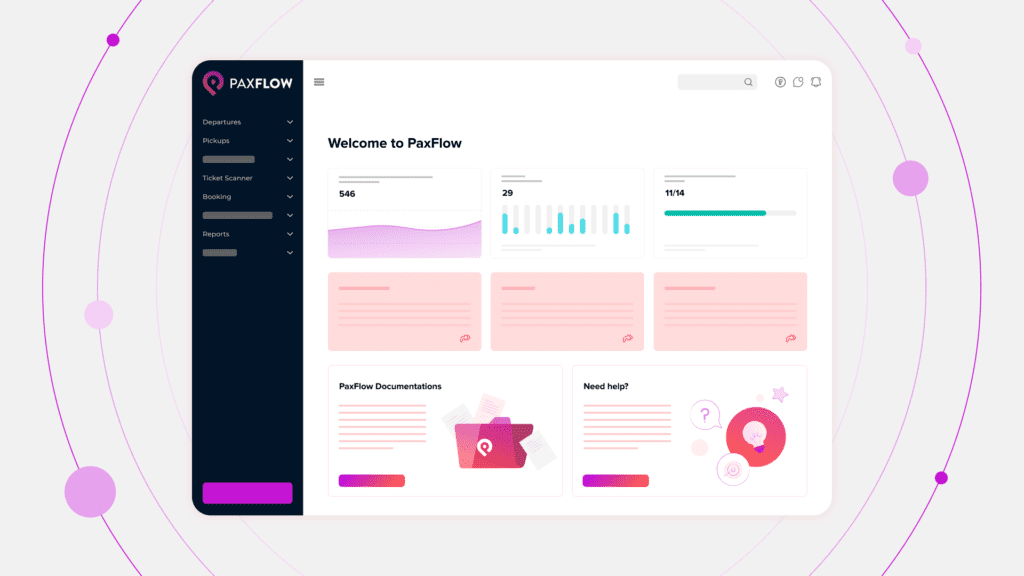
This is precisely where PaxFlow enters the picture. Not as yet another tool, but as a unifying layer that addresses the root causes of manual inefficiency.
PaxFlow is designed to streamline the operational backbone of tour businesses by:
- Automating communication flows between operators, and customers
- Allowing the customer to manage their own bookings (reducing a hefty amount of team admin)
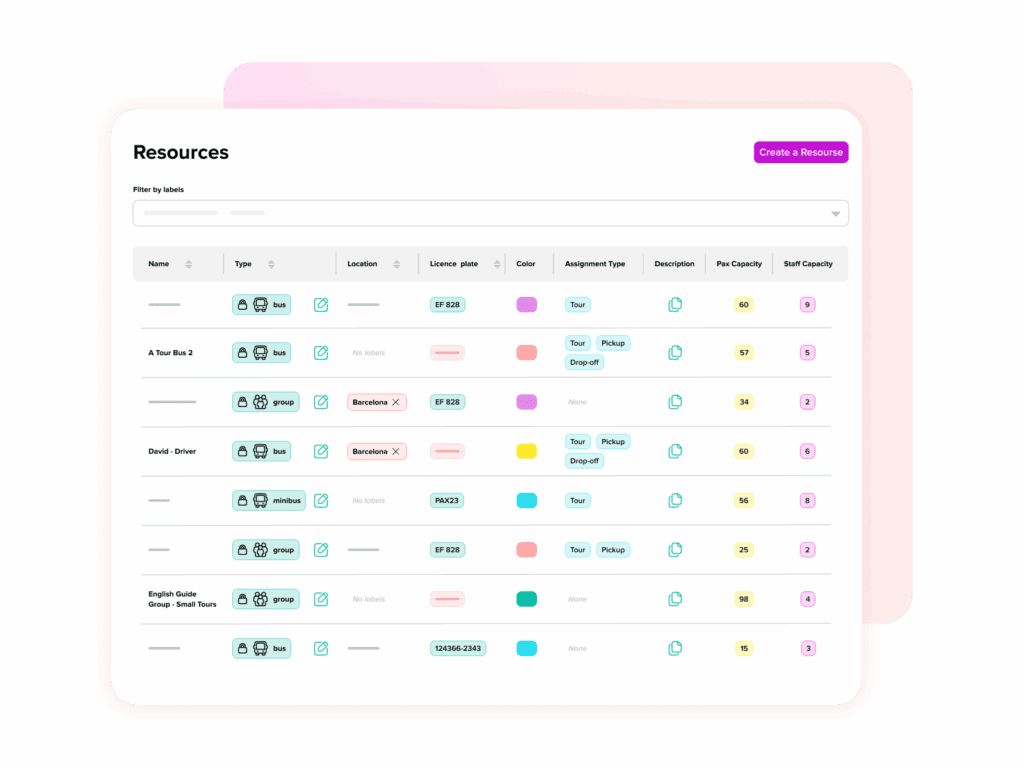
- Creating one stable platform to manage and coordinate resources and departures
- To sync with your guides on the road for perfect customer on-boarding (and, cheeky upselling)
- Reducing reliance on fragmented tools by integrating core workflows into a single platform
In effect, PaxFlow transforms operations from a series of disconnected tasks into a cohesive system so you can move those excel documents into the mysterious Bermuda Triangle of the recycle bin.
Where manual processes resemble a patchwork quilt, functional but unwieldy, PaxFlow offers something closer to a tailored suit. Structured, efficient, and built to scale from small operators to large enterprises.
Importantly, this is not about replacing expertise or operational nuance. It is about removing the administrative burden that obscures it.
The business impact of getting your time back
When manual work is reduced, the effects ripple across the business in ways that extend far beyond simple time savings. What begins as operational efficiency quickly translates into measurable improvements across performance, customer experience, and long-term growth.
Response times, for instance, improve almost immediately. Faster confirmations and updates mean customers receive the information they need without delay, increasing conversion rates while also reinforcing confidence in the service being delivered.
At the same time, operators gain the ability to handle a greater volume of bookings without needing to expand their teams at the same pace. This increase in capacity, achieved without proportional increases in headcount, becomes a powerful driver of profitability (something I’m sure we can all get behind).
Accuracy also improves as automation reduces the likelihood of human error. With fewer mistakes in bookings, pricing, and communication, operations run more smoothly and require less time spent on corrections and damage control.
These improvements naturally feed into a stronger overall customer experience. Consistent and timely communication builds trust, while a smoother operational flow ensures that what is promised is delivered without friction.
Perhaps most importantly, teams are able to shift their focus. Freed from repetitive administrative work, they can invest their time in partnerships, product development, and strategic initiatives that actually move the business forward.
In this way, time once reclaimed does not simply disappear into spare capacity. It becomes a strategic asset, actively contributing to growth rather than acting as a limiting factor.
Conclusion: Time is your most undervalued asset
Manual tasks in tour operations are easy to overlook precisely because they are so familiar. They blend into the daily rhythm, quietly consuming hours and constraining growth.
But when examined closely, their impact is anything but trivial.
Recovering that time does not require radical transformation. Just a willingness to rethink how work gets done and to adopt tools that support, rather than hinder, efficiency.
In a competitive landscape where responsiveness and scalability are paramount, the ability to operate without unnecessary friction is no longer a luxury. It is an advantage that unlocks new avenues for growth and success.
And, perhaps more importantly, it allows tour operators to focus on what they do best. Creating experiences worth remembering rather than workflows worth escaping.