5 Tasks Every Tour Operator Should Automate
Let’s be honest.
Most tour operators don’t struggle because they lack bookings. They struggle because their operational model was built for a smaller version of the business.
What worked at 5,000 passengers a year starts to creak at 15,000. At 30,000, it breaks.
More departures mean more staff coordination. More vehicles mean more scheduling pressure. More guests mean more emails, more changes, and often, more stress.
And yet many operators are still relying on inboxes, spreadsheets, printed lists, and last-minute coordination to keep everything moving.
If you want operational stability, lower admin load, and scalable growth (and maybe just a better night’s sleep), these are five tasks that should already be automated inside your business.
1.Guest Communication Across the Entire Journey
Guest communication should not depend on who is on shift that day.
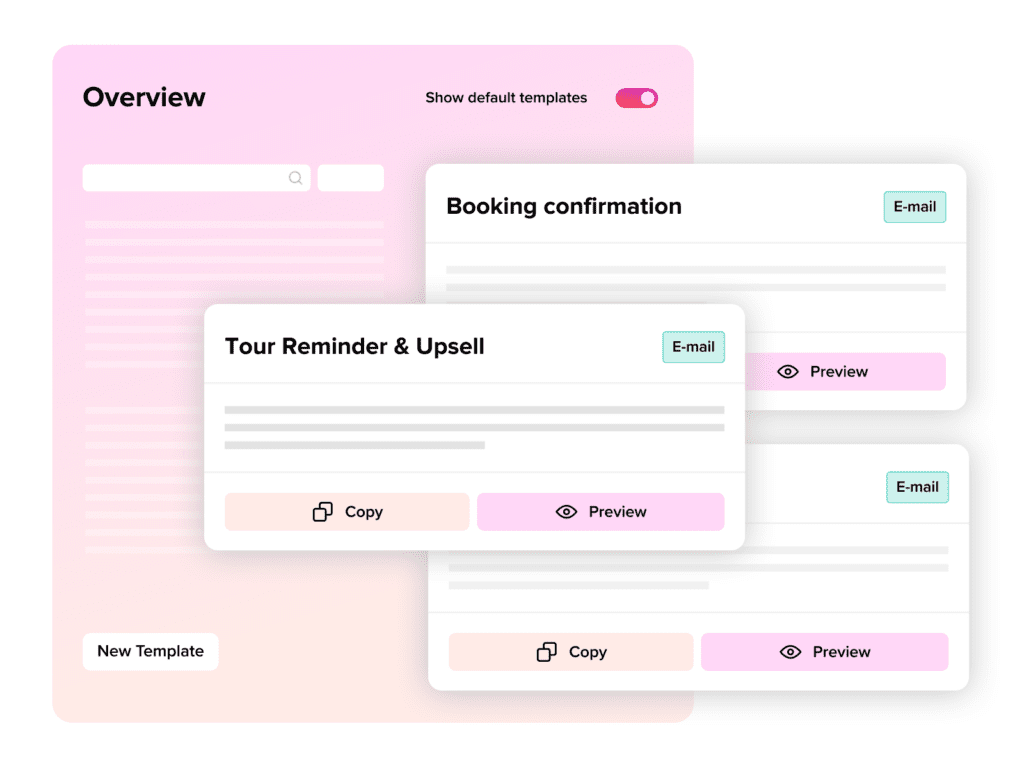
From booking to post-tour follow-up, messages should be triggered automatically based on booking status, tour type, timing, and customer data.
That includes confirmations, tour changes, cancellations, waiver reminders, pickup instructions, meeting point details, disruption notifications, review requests, and cross-sell or upsell opportunities. You get the gist.
When this is automated properly:
- Guests receive consistent, accurate information.
- Pickup confusion drops.
- Support tickets decrease.
- Revenue per booking increases through well-timed add-ons.
Automation ensures communication is proactive rather than reactive. Instead of answering the same five questions repeatedly, your system answers them before guests even ask.
2. Customer Self-Service With Operational Guardrails
Modern travellers expect control over their bookings. If they need to email or call to reschedule, upgrade, or sign a waiver, your support team becomes the bottleneck.
Customers should be able to securely:
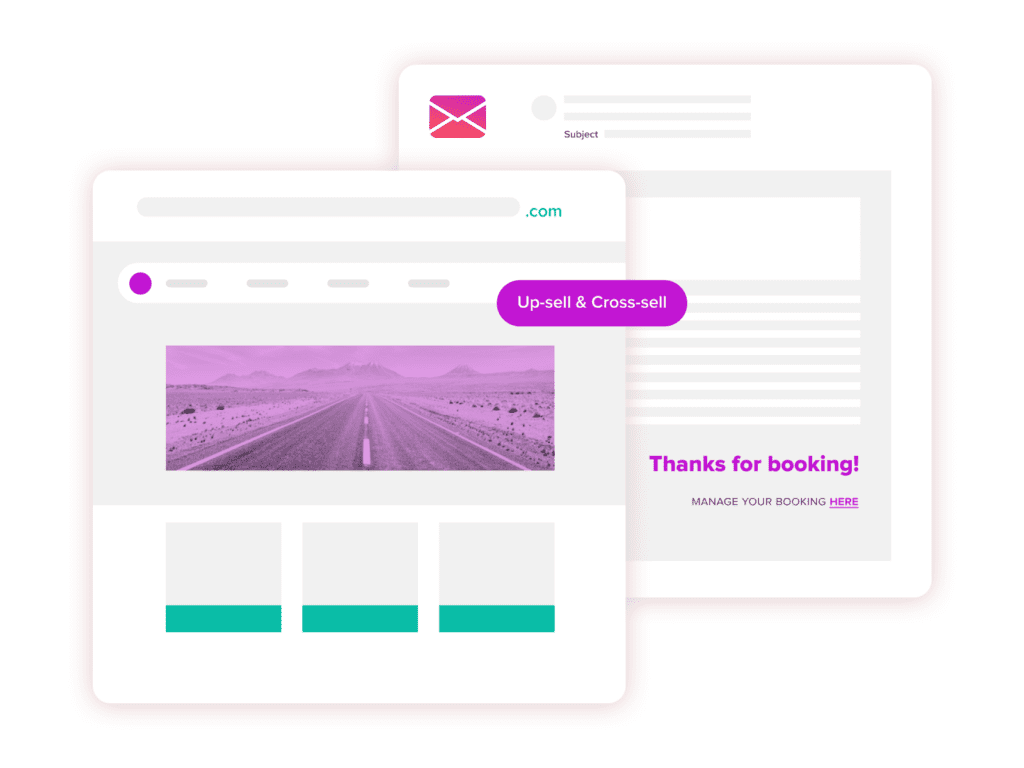
- View and manage their bookings.
- Reschedule within clearly defined cut-off times.
- Add extras or upgrades.
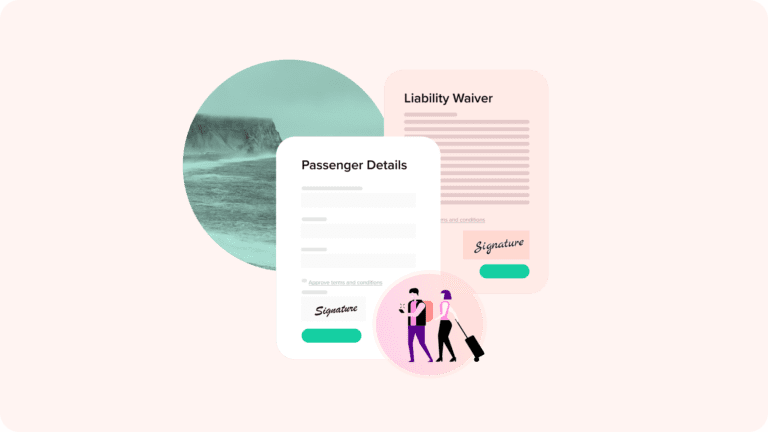
- Complete booking forms and sign waivers before arrival.
The critical part is control. Self-service should operate within rules that you define. Cut-off times protect operations. Automated cancellation policies prevent last-minute chaos. Pre-arrival forms ensure required information is collected before departure day.
When implemented correctly, self-service reduces inbound workload while increasing upsell revenue and improving guest satisfaction.
It shifts your team from processing requests to overseeing operations.
3. Departure & Manifest Management
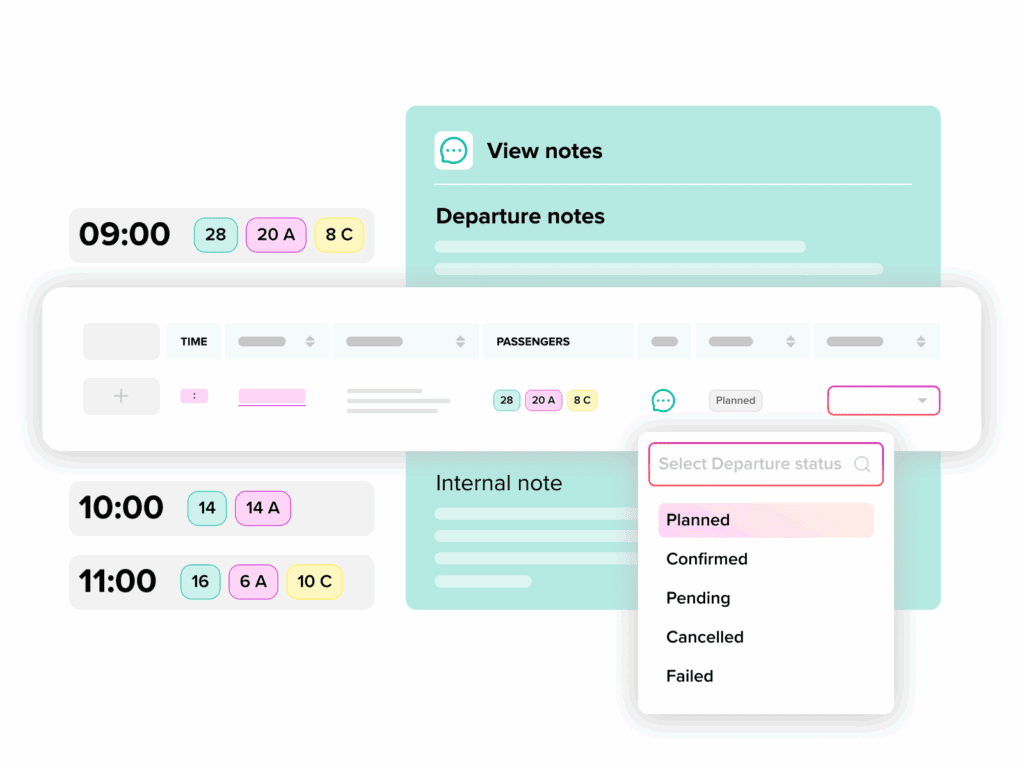
Departure management is where many operations quietly lose control.
Without automation, daily planning often involves exporting lists, manually grouping passengers, assigning guides in separate tools, tracking vehicle availability elsewhere, and updating changes across multiple systems.
That creates fragmentation.
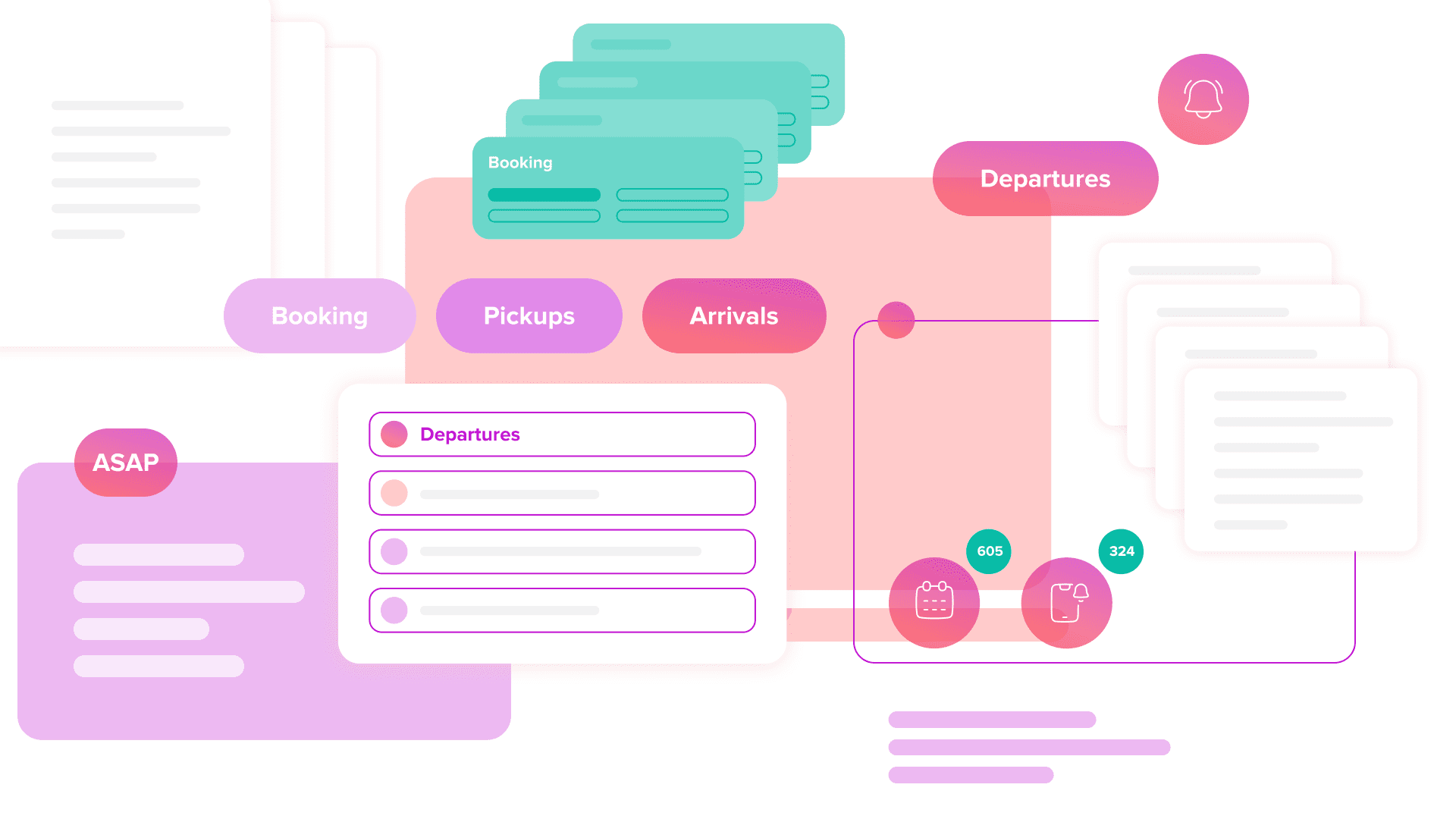
Departure management should automatically:
- Group related tours based on operational logic.
- Generate accurate, real-time manifests.
- Assign guides, drivers, and vehicles.
- Track guest arrival and check-in status.
- Monitor and log no-shows.
- Keep both office and field staff updated instantly.
With integrated ticket scanning that supports direct bookings and OTA barcodes, check-in becomes fast and verifiable. Arrival statuses update live, reducing uncertainty.
If an operator cannot instantly answer who is booked, who has checked in, and who is physically on a departure, they are operating with unnecessary risk.
Automation turns departure day from controlled chaos into structured execution.
4. Resource & Staff Scheduling
Vehicles and staff represent your highest operational costs. Managing them manually increases inefficiencies and error rates.
Fleet management should allow you to:
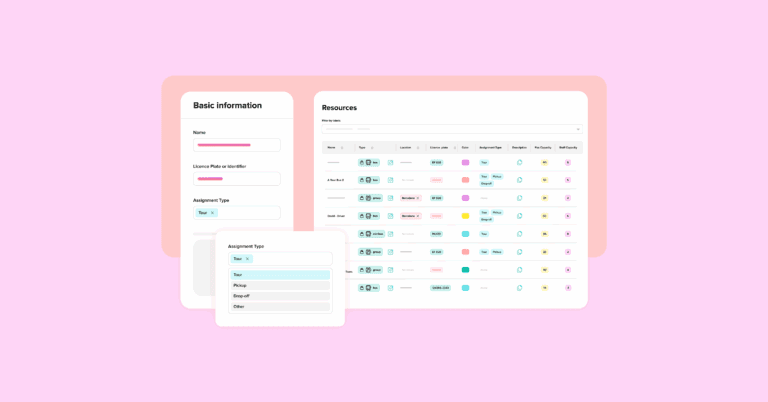
- Create and manage resource units such as buses, vans, boats, or helicopters.
- Organise them by type, location, or capability using labels.
- View availability clearly through a resource calendar.
- Assign vehicles to departures and allocate guests appropriately.
Staff management should enable:
- Structured grouping of guides, drivers, and support staff.
- Clear assignment to departures and shifts.
- Automatic visibility of schedules across dashboards.
- Real-time updates when changes occur.
When staff assignments and vehicle allocations are tied directly to departure logic, you eliminate duplicated effort and reduce the risk of overbooking resources.
Automation does not remove human decision-making. It ensures those decisions are applied consistently across the system without manual repetition.
5. Field Operations & Real-Time Passenger Control

Operational clarity cannot stop at the office door.
Field staff need tools that connect them directly to live operational data.
Mobile applications should allow guides and drivers to:
- View their assignments for the day.
- Access detailed passenger information.
- Scan tickets quickly and reliably.
- Mark no-shows instantly.
- Trigger automated workflows.
- Take payments and process upsells where relevant.
When no-shows are marked in real time, manifests update immediately. When a guest scans successfully, the office can see it. When a disruption occurs, outbound communication can be triggered automatically.
This creates a closed operational loop between field teams and central coordination.
Without this integration, operations rely on end-of-day reporting and fragmented communication (growing in pain the larger your operation), which increases delay and risk.
The Underlying Pattern
Across all five tasks, the pattern is the same.
Manual processes create friction.
Friction creates stress.
Stress creates mistakes….and, well…more stress.
Automation removes repetitive administrative work, enforces operational rules, and ensures information flows consistently across teams.
This is not about replacing staff. It is about allowing staff to focus on guest experience and operational quality instead of administrative glue.
The Bottom Line
If guest communication requires manual intervention, if customers cannot manage their own bookings within clear boundaries, if departures rely on multiple disconnected lists, if vehicles and staff are scheduled in separate tools, or if field teams are not digitally connected to the office, your operation is working harder than it needs to.
Tour operations today require systems that scale with volume, enforce consistency, and provide real-time clarity.
Automating these five tasks is no longer a competitive advantage.
It is becoming the operational baseline for professional tour operators.